

When Grace Looks Like Betrayal
“He has gone to be the guest of a sinner.”
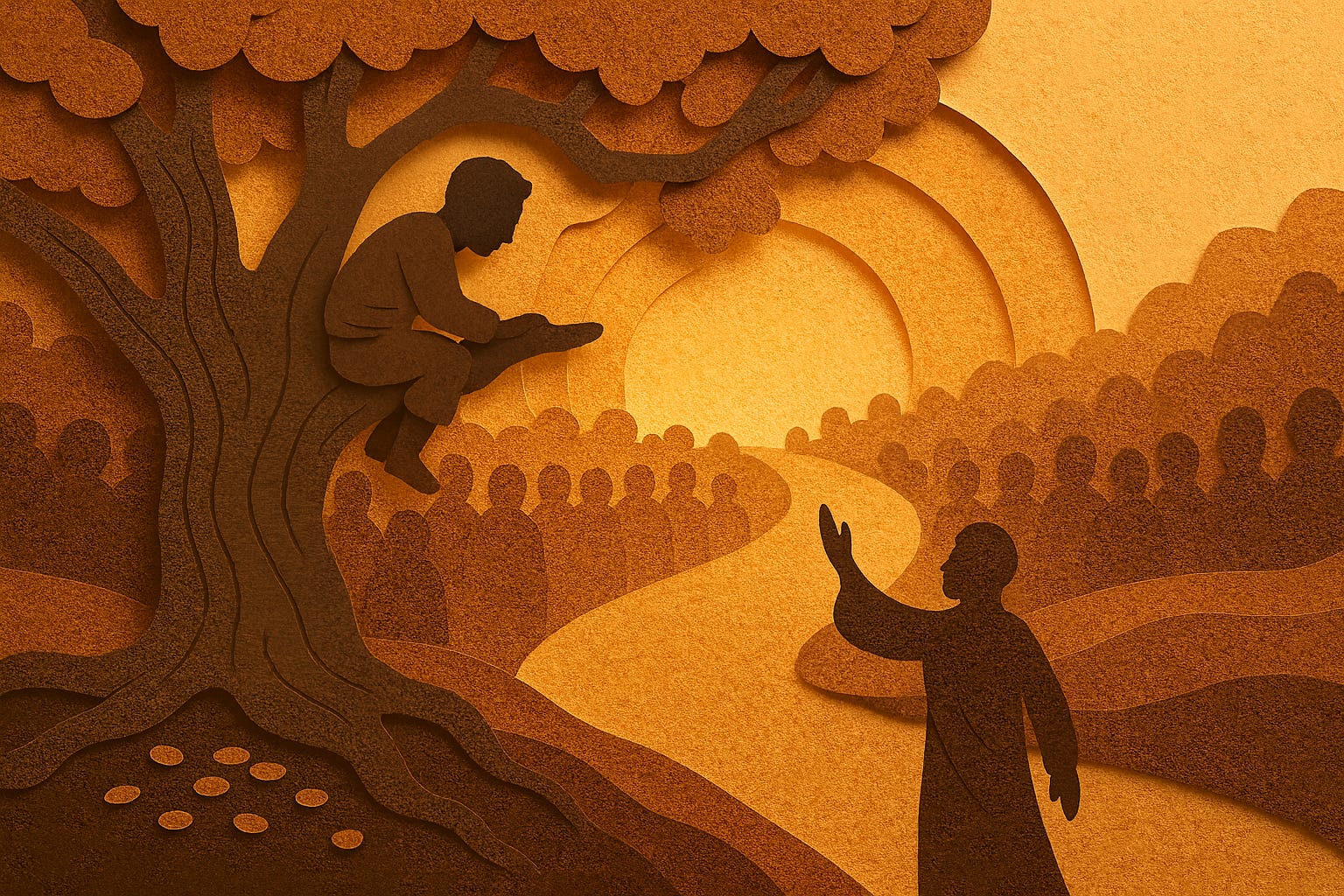
That’s what they muttered. The crowd following Yeshua through Jericho—hoping for healing, hungry for teaching—watched him walk right past them into the house of a traitor.
Not just any sinner. Zacchaeus was a chief tax collector—running a protection racket for Rome, bleeding his own people dry from wealthy Jericho where opportunities for extortion were endless.
Luke doesn’t soften this. Zacchaeus was wealthy because he was a chief tax collector. His mansion was built on coins squeezed from widows, merchants, farmers. Every denarius was betrayal.
And Yeshua looked up into that sycamore tree and said: “I’m coming to your house. Today.”
No “clean up your act first.” No waiting period to prove sincerity. Just: “I must stay at your house today.”
In a culture where table fellowship meant covenant relationship, Yeshua extended full inclusion to a man who’d gotten rich helping Rome occupy Israel. This wasn’t socially awkward—it was theologically scandalous. It looked like betrayal.
Scripture: The Living Word

Then Yeshua entered Jericho and was passing through. A man named Zacchaeus appeared. He was a chief tax collector, and he was rich. He was trying to see who Yeshua was, but could not because of the crowd, since he was short in stature. So he ran ahead and climbed up into a sycamore tree to see Him, because Yeshua was about to pass through that way.
When Yeshua came to the place, He looked up and said to him, “Zacchaeus, hurry and come down! For today I must stay at your house.” So he hurried and came down, and welcomed Him joyfully.
But when all the people saw it, they began to grumble, saying, “He went in to be the guest of a man who is a sinner!”
But Zacchaeus stopped and said to the Lord, “Look, Lord, half of my possessions I give to the poor; and if I have cheated anyone out of anything, I repay four times as much.”
Yeshua said to him, “Today salvation has come to this house, because he too is a son of Abraham. For the Son of Man has come to seek and to save the lost.”
Context: Behind the Words

The Man Named “Pure”
When Luke introduces Zacchaeus with architelōnēs (chief tax collector) and plousios (rich), first-century Jews would have recoiled. But first, the name: Zakkai (זַכַּי) means “pure” or “righteous.” A man named “The Pure One” who’d made himself unclean through systematic betrayal.
And Zacchaeus wasn’t Roman—he was Jewish. A son of Abraham who’d sold his covenant identity for Roman coins. Tax collectors weren’t government employees but publicani—private contractors who extracted whatever they could beyond Rome’s quota. The difference was their profit.
As an architelōnēs—rab mokhsa (master of the toll) in Aramaic—he managed a network of collectors on the lucrative Jerusalem-Jordan Valley trade routes. His wealth was mammon d’shikra (lying money), chametz (corrupted money)—squeezed from his own people.
The Weight of Table Fellowship
When Yeshua says “I must stay at your house today,” he’s declaring divine necessity. In Aramaic: Tsarikh ana d’eshre b’baytakh yomana—”I must dwell in your house today.” The word eshre carries the weight of the Shekinah presence dwelling with God’s people. Not a quick meal but extended fellowship.
In first-century Jewish culture, sharing a table declared kinship, extended shalom (wholeness, right-relationship), said “you are mishpachah (family).” The Pharisees understood this, which is why they consistently criticized Yeshua’s table practices.
By entering Zacchaeus’s house before any repentance—Yeshua declared this traitor worthy of covenant relationship.
The crowd muttered chayava (חַיָּבָא)—not just “sinner” but “debtor,” someone who owes an impossible debt to his entire community.
The Math of Repentance
Zacchaeus’s response shows he understood. “If I have extorted anyone, I repay four times as much”—sukophanteō in Greek, ‘ashek (systematic oppression) in Aramaic. This exceeds Torah requirements.
Leviticus 6:5 required 120% restitution. Exodus 22:1 required fourfold only for stolen livestock—animals that could reproduce. By committing to fourfold for fraud, Zacchaeus treated his crimes as seriously as theft that damages generational capacity.
And he commits to giving half his possessions to the poor. Not ma’aser (a tithe). Chatzi (half). This was radical redistribution that would fundamentally alter his economic status.
This is teshuvah (תְּשׁוּבָה)—not just feeling sorry but actively reversing course and repairing the path you destroyed.
“Son of Abraham”
When Yeshua declares “Today salvation has come to this house, because he too is a son of Abraham,” he’s making a staggering claim.
Tax collectors were considered am ha’aretz—effectively outside the covenant community. Ritually unclean, socially ostracized, spiritually dead. Many communities wouldn’t accept their repentance because the harm was irreparable.
But Yeshua declares: bar Abraham (בַּר אַבְרָהָם)—full inclusion in Israel’s identity and inheritance. The Aramaic metul d’af hu (”he too”) is emphatic. Zacchaeus wasn’t second-class or probationary. He was fully, emphatically also a son of Abraham.
This is what made it scandalous. Yeshua restored his covenant identity before the restitution was complete.
Covenant: The Relational Core

Grace Before Repentance
Here’s what makes this theologically explosive: Yeshua extended covenant relationship before Zacchaeus repented.
Read the order:
Yeshua invites Himself (v.5)
Zacchaeus receives Him joyfully (v.6)
Crowd grumbles (v.7)
Then Zacchaeus declares repentance (v.8)
Then Yeshua declares salvation (v.9)
This isn’t the order we expect. We want: recognize sin → repent → make restitution → then God accepts you → then welcome into community.
But Yeshua flips it.
The Scandal of Preemptive Grace
When Yeshua extends table fellowship, Zacchaeus hasn’t confessed, apologized, or committed to anything. He’s just a wealthy traitor in a tree, curious enough to look ridiculous.
This is the pattern throughout the Gospels: Matthew calls Levi while he’s still at the tax booth. The woman caught in adultery receives non-condemnation before the command to change.
The covenant pattern: God’s grace initiates, human response follows.
The religious leaders had it backwards: clean yourself up → God accepts you → welcome into community → transformation.
But this creates an impossible bind: How do you clean yourself up before you’re clean?
Yeshua’s approach: grace creates the space for repentance.
Zacchaeus’s radical commitment doesn’t earn Yeshua’s presence—it’s the fruit of it. This is what Romans 2:4 means: “God’s kindness leads you to repentance.”
The Tension We Must Hold
But this isn’t cheap grace. Look at what Zacchaeus does:
Specific, costly, measurable restitution
Doesn’t minimize the harm (fourfold exceeds Torah requirements)
Makes a binding legal declaration: “This is who I’m becoming”
The covenant truth: grace makes change possible, then calls you into the costly work of actually changing.
The grace is free. The transformation is real. Both are essential.
When Yeshua declares “Yomana ata purkana” (”Today salvation has come”), it’s present-tense. Not “will come if you follow through.” The purkana (rescue, deliverance) happened when Yeshua walked through the door. The restitution is evidence salvation arrived, not the price of admission.
This is the pattern for the ekklesia:
Extend relationship first—before people clean up, before they prove they’re serious
Trust grace to do its transforming work
Hold both grace and accountability—radical welcome and radical transformation
The Zacchaeus story doesn’t let us collapse that tension. It demands we live in it.
Practice: Living It Out
When Covenant Requires Costly Repair
Consider two people who don’t know each other, attend different churches, live in different worlds. Both trying to follow Yeshua. Both seeking ekklesia. Both wrestling with sin that’s caused real harm.
Person A: The White Evangelical Who Is Racist
Not “woke.” Not reading anti-racism books. Still using “all lives matter.” Still defensive about systemic racism. Still believing their success came purely from hard work. Benefiting from systems built on racial injustice—mostly blind to it, or rationalizing it.
They go to a predominantly white church. Serve. Tithe. Read their Bible. Following Yeshua as best they understand.
Person B: The Black Progressive Who Demands Reparations
Experienced racism personally and generationally. Watched white Christians spiritualize away injustice. Earned their anger honestly.
But that anger has become a weapon. Refusing grace until perfect repentance. Making reparations a prerequisite for relationship. Using pain to justify wounding others. Righteous anger become self-righteous judgment.
They go to a predominantly Black progressive church. Serve in justice ministries. Read their Bible through liberation theology. Following Yeshua as best they understand.
Neither knows the other exists. Both seeking ekklesia—but not in covenant with each other.
The Ekklesia’s Call
If we take Yeshua’s prayer seriously—that we’d be one so the world would know—these two are called into covenant relationship.
Not because it’s comfortable or they’re ready. But because that’s what ekklesia means.
The white evangelical must: Intentionally seek relationship with Black believers. Not for absolution or diversity points. To be discipled, to listen, to have blindness confronted, to be told hard truths.
Find a multiethnic church. Join reconciliation groups. Build actual friendships. Choose proximity over comfort.
The scandal: The ekklesia must welcome them before they’re ready—while still defensive and blind. The invitation comes first. And in that relationship’s safety, transformation can begin.
The Black progressive must: Be willing to extend relationship to white evangelicals who aren’t ready. Not to make them comfortable or minimize harm. But to embody the Yeshua pattern: grace creates space for repentance more effectively than judgment.
Sit at tables with white Christians who are still blind, still defensive. Choose costly truth-telling in love over (understandable) refusal until they’ve proven themselves.
The scandal: The ekklesia must challenge this refusal while they’re still angry—now, while the anger is righteous and raw.
What Makes This So Hard
For the white evangelical:
Choosing discomfort voluntarily—walking into minority spaces where they’ll be challenged
Risking rejection—absorbing judgment and showing up anyway
Staying when it gets hard—can’t run to comfort when confronted
For the Black progressive:
Risking being hurt again—opening to same microaggressions, same harm
Trusting grace to work despite track records suggesting otherwise
Giving up the power of gatekeeping—laying down righteous anger as weapon
The Truth: Both are right about what the other needs. Both are blind to what they themselves need.
The white evangelical is right that demanding perfect performance before grace isn’t gospel. But they’re blind to how their comfort was subsidized by others’ suffering.
The Black progressive is right that harm requires repair and anger is faithful. But they’re blind to how righteous judgment can become power that prevents transformation.
The ekklesia calls both out of comfort into costly covenant:
To the white evangelical: Seek relationship that will make you uncomfortable, challenge your blindness, require costly restitution. You don’t get to be comfortable and call it faithfulness.
To the Black progressive: Extend grace to people who aren’t ready yet, who’ll say ignorant things. Trust that God’s kindness leads to repentance. You don’t get to be safe and call it justice.
Both will resist: “Why seek discomfort? My church is fine.” “Why extend grace to those who’ve harmed me?”
The answer: Because Yeshua walked into Zacchaeus’s house before he repented. Because grace comes first. Because ekklesia means being one across every division because Someone loved us before we were ready.
The ekklesia is what happens when they choose covenant anyway. When both discover they’re Zacchaeus—enriched by systems that harm others, blind to complicity, in need of a Messiah who says “I must stay at your house today” before they’ve earned it.
Three Takeaways
Grace creates space for repentance, not the reverse. If you’re waiting to be “good enough,” you’ve misunderstood. If you’re withholding relationship until others prove they’ve changed, you’ve misunderstood your role.
Repentance without restitution isn’t biblical. Teshuvah requires concrete action—returning what was taken, repairing what was broken, redistributing what was hoarded. If you’ve benefited from harm—biblical repentance requires more than feeling bad. It requires repair.
Covenant community holds both grace and accountability. Not accountability without grace (shame) or grace without accountability (cheap grace). Yeshua held both: radical welcome and costly transformation. This is uncomfortable. It will never feel resolved. That’s the point.
Discussion Questions
Who are the “Zacchaeuses” whose sin feels too great for restoration? What would extending relationship while requiring restitution look like?
Where have you experienced grace that created space for transformation? Where are you withholding that same grace?
How do we distinguish restitution that repairs harm from performance that earns acceptance?
Seven-Day Practice Rhythm
Day 1 🪞- Where Am I Zacchaeus? Name one specific way you’ve enriched yourself at others’ expense. Don’t minimize. Just name it.
Day 2 🙏 - Confession Bring it before God. Ask what teshuvah looks like. What direction needs reversing? What path needs repair?
Day 3 📋 - Restitution Planning Get specific: what costly, measurable repair for Day 1’s confession? Write one concrete action.
Day 4 🤝 - Extend Grace Identify one person you’ve withheld relationship from. Take one small step toward relationship. Embody grace-first.
Day 5 💬 - Community Reflection Share a discussion question with your group. Get specific about your struggles holding grace and accountability.
Day 6 💝 - Redistribute Your Wealth Identify a group harmed by systems you’ve benefited from. Give financially, volunteer, amplify voices. Make it costly.
Day 7 🕊️ - Sabbath Rest Remember you’re a child of Abraham not for what you’ve done but whose you are. Read Luke 19:1-10. Hear Yeshua: “I must stay at your house today.” Receive the grace.
Closing Blessing
May the God who walked into Zacchaeus’s house uninvited grant you the audacity to extend grace before it’s earned.
May the Messiah who declared “I must stay at your house today” give you courage to seek out the uncomfortable relationships that will expose your blindness and transform your heart.
May the Ruach HaKodesh who produces fruit in soil we thought was barren grant you faith to believe that the kindness of God leads to repentance—in you, and in those you’re tempted to write off.
May you know yourself as both the crowd—grumbling at scandalous grace—and as Zacchaeus—desperate in a tree, enriched by harm, in need of a Savior who sees you and calls you by name.
May you discover that salvation comes not when you’ve cleaned up enough to deserve it, but today—right now—because He has entered your house.
And may the ekklesia become visible through you: extending covenant relationship before repentance is proven, requiring costly restitution as the fruit of grace, holding both radical welcome and radical transformation without collapsing the tension.
For you too are a son, a daughter of Abraham—not because you’ve earned it, but because the Son of Man came to seek and to save the lost.
Go in peace. Extend scandalous grace. Stay when it gets hard. Trust the kindness of God to do what your judgment never could.
Shalom.