

In 2008, 1,330 children and celebrities gathered at Emirates Stadium in London to set a world record for the game of Telephone. The exercise lasted 2 hours and 4 minutes.
The starting message: “Together we will make a world of difference.”
Halfway through the chain: “We’re setting a record.”
By the end: complete distortion.
Just 2 hours. 1,330 people. One sentence.
Now imagine something far more consequential.
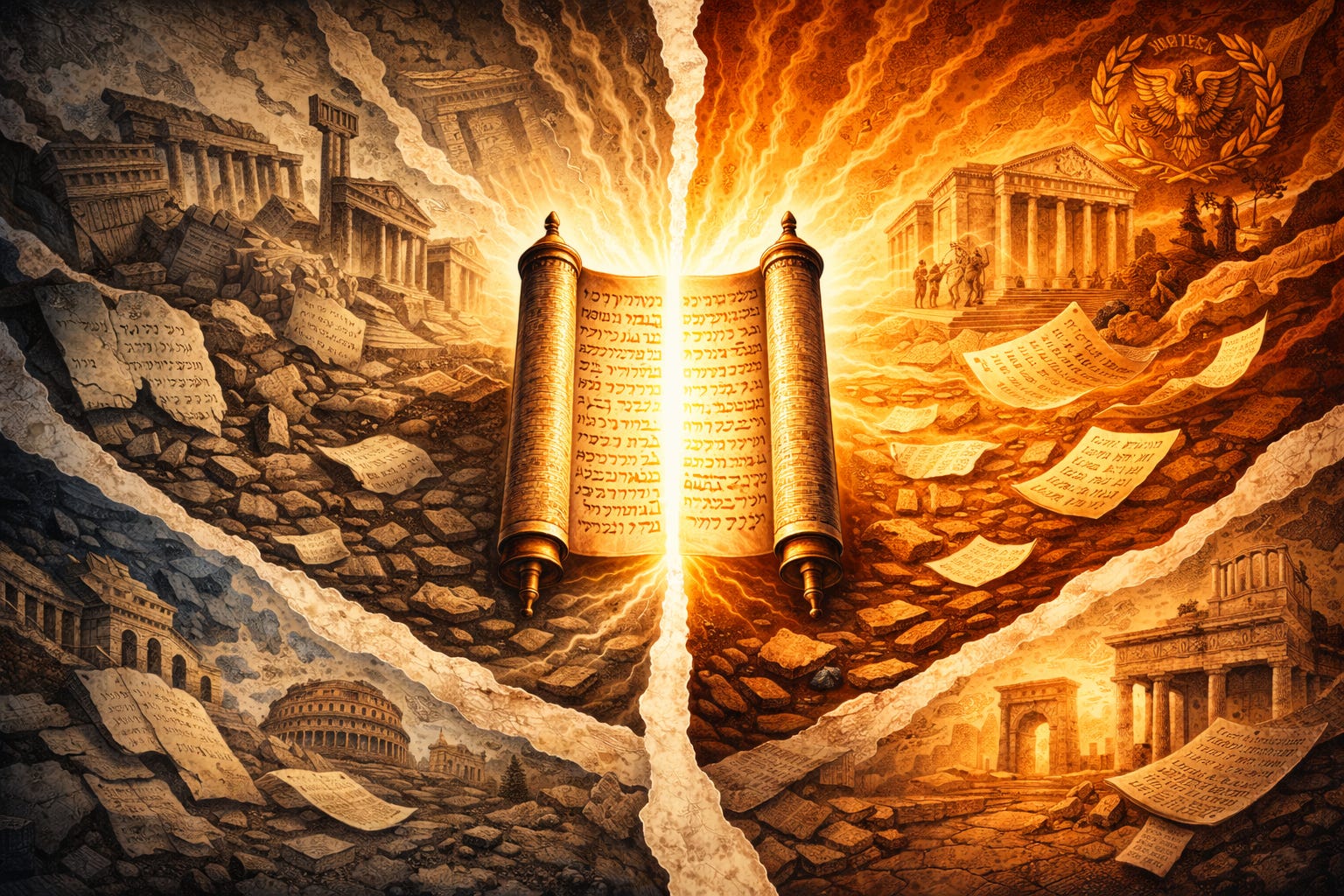
Not two hours — but two thousand years. Not one sentence — but the most important message ever spoken. Not a single whisper chain — but layer upon layer of language, culture, empire, and institution transmitted and translated across centuries.
His mother called Him Yeshua (יֵשׁוּעַ). You call Him Jesus. Those aren’t translations. They’re different names. One means “YHWH saves.” The other doesn’t mean anything in English.
His Father’s name — YHWH (יהוה), the covenant name revealed to Moses and spoken thousands of times throughout the Hebrew Scriptures — appears in your Bible as “the LORD.” A title, not a name. The personal, covenant-making God hidden behind four capital letters.
And it doesn’t stop with names.
Ask the average believer what the Bible says about salvation, and they’ll quote Romans 10:9 without knowing what Paul was wrestling with in Romans 9-11. They’ll cite Ephesians 2:8-9 without reading verse 10. They’ll recite John 3:16 without understanding what “eternal life” meant to a first-century Jew.
They’re not reading Scripture. They’re repeating what they’ve been told Scripture says.
But here’s what’s remarkable: Even if you read the entire Bible cover to cover as it’s currently translated, you’d start to see the tensions.
“Once saved, always saved” vs. Hebrews’ warnings about falling away.
“Faith alone” vs. James saying “faith without works is dead.”
“Go to heaven when you die” vs. a Kingdom breaking into the present.
The tensions aren’t in Scripture itself — they’re between what Scripture actually says and what popular Christianity claims it says.
What Happened?
Something shifted. Many things shifted. And they compounded across centuries until the faith we inherited looks and sounds very different from the faith Yeshua launched.
This series traces those shifts — not to accuse, but to understand. Not to tear down, but to ask: What was there before? What might we recover?
We’re not here to tell you everything you believe is wrong. We’re here to ask a question that every serious follower should be willing to face:
Is there a biblical foundation for this?
If there is, hold it with confidence. If there isn’t — if what you find is tradition, or inference, or the fruit of decisions made centuries after the apostles — then you have a decision to make.
The Series
Here’s where we’re going. Each part traces a specific shift — with history, with sources, with Scripture. You can read them in order, or start wherever the question grabs you.
Part 1 — The Names We Lost
YHWH became “the LORD.” Yeshua became “Jesus.” The covenant name of God — spoken thousands of times in the Hebrew Scriptures — was hidden behind a title. The name that means “YHWH saves” was replaced with a word that carries no meaning. What happens when you don’t know the name of the One you’re following?
Part 2 — When Hebrew Became Greek
The Scriptures were translated — from Hebrew into Greek, beginning in the 3rd century BC. Translation is never neutral. Nephesh became psyche. Emunah became pistis. Torah became nomos. The containers shifted, and so did what people heard. What might have changed when Hebrew thought was poured into Greek containers?
Part 3 — How Greek Thought Shaped the Faith
As the faith spread into the Gentile world, the people carrying it changed. Greek philosophy — Plato, the immortal soul, the divide between spirit and matter — began to shape how the faith was explained and defended. The questions changed. “What is Yeshua sent to do?” became “What is Yeshua’s essence?” New vocabulary emerged. What happens when the framework shifts?
Part 4 — Where Did the Creeds Come From?
Nicaea. Constantinople. The councils that produced the creeds we inherited. Greek philosophical vocabulary became the test of orthodoxy — ousia, hypostasis, “one substance in three persons.” Emperors convened the councils. Imperial authority backed the conclusions. Where did these formulations come from? And do you know the difference between what Scripture says and what the councils decided?
Part 5 — When Did the Empire Get Involved?
Constantine changed everything. The ekklesia went from persecuted movement to state religion. Basilicas replaced home gatherings. The calendar shifted. “Go, you are sent” became “come, worship here.” The shaliach pattern — the identity of being sent ones — was inverted into an institutional model of attendance and membership. What was gained? What was lost?
Part 6 — How Did Structure Become Doctrine?
The Edict of Thessalonica made Nicene Christianity the law of the empire. Dissent carried consequences. The canon was stabilized by councils. Historical decisions — made by specific people, in specific contexts, for specific reasons — became “how it’s always been.” How does contingency become doctrine? And how do you tell the difference between what was revealed and what was decided?
Part 7 — What Did the Reformation Fix?
Luther, Calvin, Zwingli. The Reformation broke real chains and recovered real truths — justification by faith, the priesthood of all believers, the Bible in common languages. But the Reformers kept more than they questioned. The Sunday calendar. The building-centered model. The inherited creeds. The church-state entanglement. They renovated the house Constantine built. They didn’t return to the original blueprints. What did the Reformation fix — and what did it never ask?
Part 8 — What Did We Actually Inherit?
This is the conclusion — and the confrontation. Eleven things widely believed in the modern Western church, each one examined with a single question: Is there a biblical foundation for this? Salvation as a one-time decision. Cessationism. The rapture. “Go to heaven when you die.” Consumer Christianity. “We’re not under law.” Replacement theology. Sunday as “the Sabbath.” Christmas and Easter as the only holy days. Not a verdict — an inventory. What you do with it is up to you.
An Invitation
You have resources in your pocket that didn’t exist outside elite academic libraries a generation ago. Hebrew lexicons. Aramaic studies. Historical research. Primary sources. The barriers are gone.
This isn’t accident. This is providence.
Is it possible that YHWH allowed the distortion — and then provided the tools to trace it back? Is it possible that the same God who said “seal the book until the time of the end” is the one who ensured the technology would exist to unseal it?
We’re not offering a new denomination. We’re not asking you to become Jewish. We’re not telling you to reject everyone who sees things differently.
We’re offering an ancient path. The one Yeshua actually walked, in the language He actually spoke, in the world He actually lived in. Rooted in the entirety of Scripture. Centered on His actual words. Freed from 2,000 years of telephone-game distortion.
The treasure is there. The map is in your hands. The barriers are gone.
All that’s required:
Humility to admit you might be wrong.
Courage to dig.
And faith to ask the Ruach HaKodesh to guide you on the journey.
“Stand at the crossroads and look. Ask for the ancient paths — where the good way is — and walk in it. Then you will find rest for your souls.” — Jeremiah 6:16 (TLV)
The Way is still open.
Will you walk in it?
Begin the series: Part 1 — The Names We Lost →
Well done. Looking forward to this series.